
By Jenny McBean, Insight Director and Head of Gaming at Bryter
Cozy games have moved from niche subculture to mainstream force. What was once seen as a smaller corner of the market is now shaping how audiences discover, play and talk about games. And for brands, publishers and marketers, that shift matters.
At Bryter, we’ve been looking at the momentum behind the cozy gaming movement and what it tells us about changing player needs in our latest mini report on Cozy Gaming. The headline is clear: cozy is no longer a side trend. It’s a meaningful expression of how gaming culture is changing.
Cozy gaming has evovled
The category’s rise is visible both culturally and commercially. Cozy titles are now some of the most talked-about releases in the market, with upcoming launches attracting serious anticipation. In our report, several of the most anticipated cozy games of 2026 are already posting major wishlist numbers, with titles like Witchbrook and Outbound showing the kind of demand that would once have been associated more traditional blockbuster genres.
That growth is part of a broader trend. The space has expanded rapidly in recent years, with the number of cozy releases climbing sharply and audience appetite continuing to build. This is not just a short-lived aesthetic trend driven by social media, it reflects a deeper shift in what players want from interactive entertainment.

Why cozy games resonate
Cozy games offer something many players increasingly value: escapism.
Low-stakes gameplay, gentle progression, soft visual design, comforting music and player creativity all contribute to experiences that feel restorative rather than exhausting. In a crowded entertainment landscape, that emotional value is powerful.
This also helps explain why cozy games gained such momentum during and after the pandemic. Players were looking for escapism, safety and calm. That need didn’t disappear when the lockdowns ended, if anything, it evolved into an ongoing appetite for games that fit around everyday life rather than demanding total intensity.
For many audiences, cozy games provide a form of playable decompression - a way to switch off, reset and enjoy small achievements without pressure.
The audience is bigger than people think
One of the biggest misconceptions around cozy gaming is that it serves only a narrow demographic. Our research shows that cozy games are a regular part of play for a substantial share of women gamers, but the appeal doesn’t stop there. These games also attract more competitive and hardcore players who want a change of pace after high-intensity sessions or a demanding day at work.
That crossover matters. It shows that cozy is not the opposite of “real gaming” - it’s part of a more flexible and emotionally varied gaming lifestyle. Players are no longer defining themselves by a single genre identity, instead, they move between moods, formats and needs. Cozy games fit naturally into this pattern.

Inclusion is a major part of the story
The rise of cozy gaming is also closely tied to inclusivity. As toxicity in gaming spaces increased - evident in Bryter's Women Gamers Study - so has demand for experiences that feel welcoming, expressive and low-pressure. Cozy games often create spaces where players can engage on their own terms, without the aggression or performance pressure that can shape other parts of gaming culture.
For some audiences - especially women and other players who have felt excluded or targeted in mainstream gaming spaces - that makes cozy games especially meaningful. These titles don’t just offer a different gameplay loop, they offer a different social and emotional proposition.
That has helped the category carve out a distinct role in the market: one built not only on mechanics, but on atmosphere, identity and belonging.
'Cozy culture' is amplifying the trend
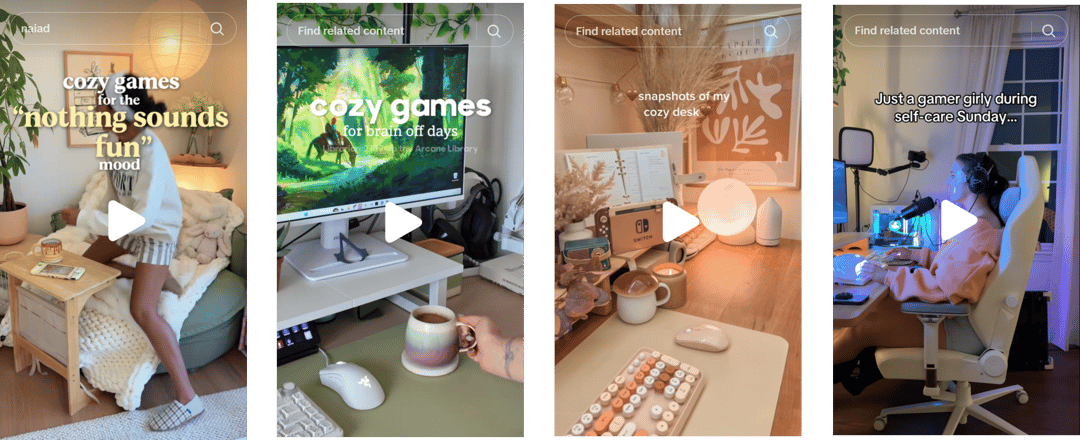
Cozy gaming is thriving because it works so well beyond the game itself. The genre’s semiotics - visual language, music, routines and rituals – help build a distinct community and lifestyle that is highly shareable and recognisable across social platforms and creator content.
For marketers, this opens up interesting possibilities. Cozy gaming sits at the intersection of entertainment, lifestyle and self-expression, which gives brands more room to connect authentically.
Final thoughts
Gaming audiences are evolving and their expectations are evolving with them. Gaming is not just a medium for excitement, but also a space for comfort, self-expression and connection.
For years, innovation in gaming has often been discussed in terms of graphics, scale or technical performance. Those factors still matter, but cozy gaming shows that emotional relevance can be just as powerful in driving engagement, and that culture is increasingly shaped by experiences people can inhabit, not just consume.
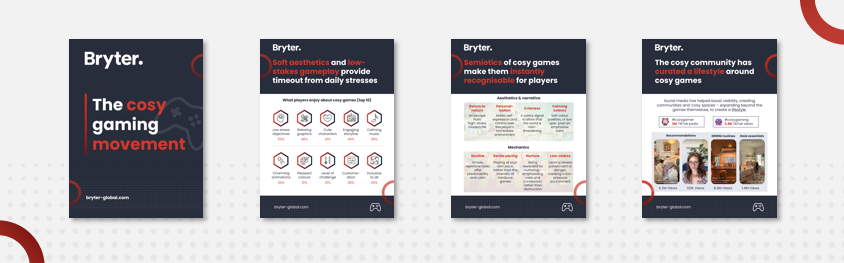
Download our mini report on The Rise of Cozy Gaming
Get in touch
Want to build a better understanding of key categories and target audiences? Get in touch here with one of the insights team to learn more about our gaming research methodologies and how insights can inform future development and strategies.
Learn
Read about the history of the video game industry, mobile gaming and the key trends and milestones that have shaped the industry we know today
web browser, url, browser, computer network, requests, malicious software, captcha, javascript, network connection, page checks